By Andrew Rose-Innes, MBChB, neurology
Q: Why did my doctor refer me for EMG testing?
If you’re experiencing numbness, tingling, muscle weakness or wasting (atrophy), cramps, muscle twitching or unexplained limb pain, your doctor might suspect that a nerve or muscle disorder is causing your symptoms. Electromyography (EMG) – typically done together with a nerve conduction study — can help find out.
This diagnostic testing provides detailed information about how your nerves and muscles are working, how well signals are passing between them, and the conditions that might be affecting them.
Q: What conditions can EMG help diagnose?
EMG is helpful in diagnosing many conditions that affect the peripheral nervous system. A few examples include:
- Carpal tunnel syndrome: Hand pain, numbness and sometimes weakness caused by a compressed nerve in the wrist
- Ulnar neuropathy: Often experienced as numbness and tingling in the ring and pinky fingers caused by a compressed nerve, typically at the elbow
- Pinched nerves (radiculopathy) in the spine: Compression or inflammation of a nerve root, often in the neck or low back
- Peripheral neuropathy: Various conditions affecting the long nerves to the hands and feet, which can cause loss of feeling, pain and sometimes weakness
- Motor neuron disorders: Conditions such as ALS (Lou Gehrig’s disease), which cause weakness and wasting of muscles that affect movement
- Myopathies: Disorders that affect the muscles themselves, causing weakness and sometimes pain
- Myasthenia gravis: An autoimmune disease that results in rapid fatiguing of muscles, often starting with those that control eye movement and swallowing
Q: How do EMG and nerve testing work?
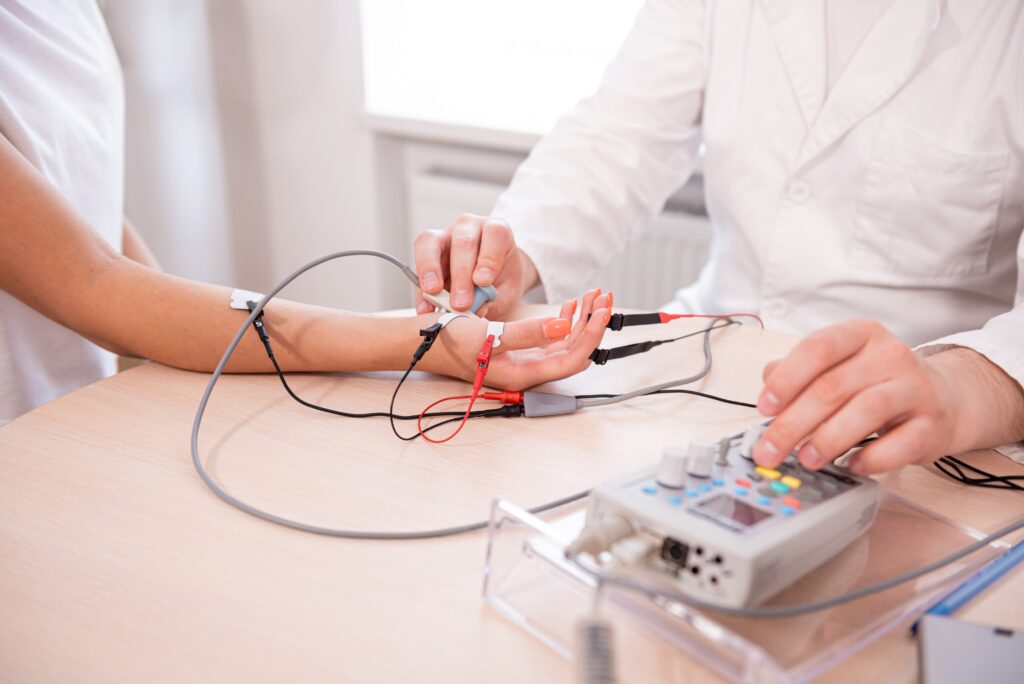
In a nerve conduction study, electrodes placed on the surface of the skin record impulses from the nerves and muscles when they are stimulated with a small electric shock. This can be a little uncomfortable, but most people tolerate it well, and no harm is caused to the nerves.
EMG records muscle activity. Your doctor will insert a small needle into various muscles (often those close to the skin) to record activity and identify whether or not the muscle is healthy and functioning as it should be. You may be asked to relax or tighten the muscle. Needles can cause minor pain, but again, most people tolerate the test well. Any discomfort is brief and doesn’t continue after the test is over.
Together, these tests provide a comprehensive look at the function of your nerves, your muscles and the communication between them.
Q: What can I expect before, during and after the test?
The two tests together take about 30 to 60 minutes. There’s no special preparation needed ahead of time.
Neither test involves radiation or anesthesia, and serious complications are very rare.
At the conclusion of your tests, we’ll share the general results with you in the office and then follow up with a more detailed report.
Q: How does EMG help guide treatment?
In addition to helping to confirm your diagnosis, EMG can help localize the problem, assess its severity, determine whether further testing is needed and provide a clearer picture of the prognosis. With all this information, you and your care team can make informed decisions about the best therapies or surgical solutions for you.
Dr. Rose-Innes practices at our Northeast location. He holds an MBChB (Bachelor of Medicine, Bachelor of Surgery), the South African equivalent of an M.D. in the U.S.