By Albert Khine, M.D., gastroenterology
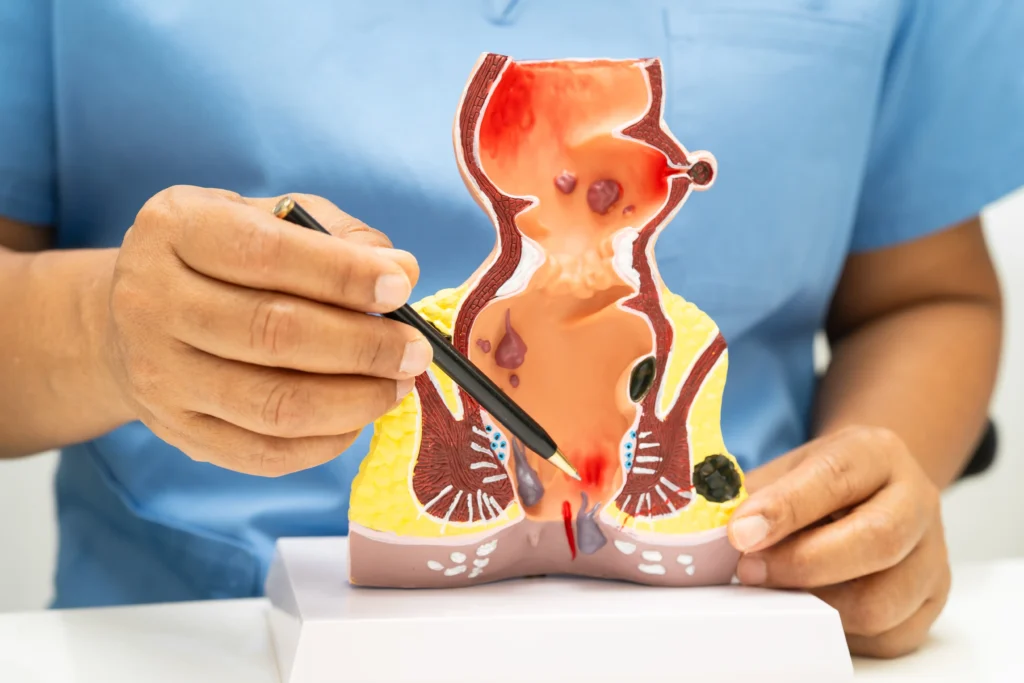
Q: Anal itching, pain, bleeding, swelling — could it be hemorrhoids?
Yes, any or all of those symptoms could mean that you have hemorrhoids.
Technically, everyone has hemorrhoids, which are just small beds of tissue that contain a lot of blood vessels, either inside the rectum or outside, around the anus. When we say someone “has hemorrhoids,” we mean that these tissues are swelling and causing symptoms.
All hemorrhoids, whether internal or external, can swell and bleed. External hemorrhoids are the ones that cause pain — you feel them more because you have more nerve fibers there. When the swelling is substantial, even internal hemorrhoids can push their way to the outside.
Q: What causes hemorrhoids?
Constipation and straining during bowel movements are key causes, because they increase pressure on these tissues, leading the blood vessels to engorge and the tissues to swell up. At the other extreme, frequent pooping can worsen symptoms, too, as the blood vessels engorge with each bowel movement. Other contributors include sitting for long periods of time, aging, obesity and pregnancy.
Q: Can using your phone on the toilet really increase hemorrhoid risks?
It might, as this interesting study showed. Reading, scrolling and texting can increase your time on the toilet, which puts more pressure on that area and makes hemorrhoids more likely to swell up. This might be one reason why younger people are starting to experience hemorrhoids.
Q: What’s your best advice for preventing hemorrhoids?
The top two: Limit your time on the toilet, and try to have regular bowel movements. The best way to stay regular is to include plenty of good fiber in your diet. About 25-35 grams of fiber per day will help you stay more regular. See my previous blog post to learn seven ways to fit in more fiber.
Changing your toilet posture also can help. Elevating your feet — whether with a squatty potty or just a low footstool or box — reduces straining and time on the toilet.
Q: What can people do to relieve hemorrhoid symptoms?
The preventive measures above can reduce symptoms. In addition, these non-prescription remedies can help:
- Over-the-counter hemorrhoid creams, like hydrocortisone cream and Preparation H, can reduce swelling. These are for short-term use — two weeks is the upper limit.
- Lidocaine cream helps relieve pain.
- Medicated wipes, such as Tucks pads, contain witch hazel, an astringent that helps shrink swollen hemorrhoids.
Q: When should a person see a doctor?
If symptoms last more than four months, or if you have other red flags, talk to your health care provider. Bleeding, for example, is sometimes a sign of other problems, such as colorectal cancer or colitis. Anemia, weight loss, and changes in your stool pattern are other red flags that warrant further investigation.
Q: What medical procedures can treat persistent hemorrhoids?
Band ligation — the procedure that we offer at The Portland Clinic — is considered the most effective procedure for internal hemorrhoids. It involves tying a rubber band around the base of a hemorrhoid to cut off its blood supply until it sluffs off. It’s simple, relatively painless, covered by most insurance plans, and can be done in just a few minutes during regular office visits.
To minimize discomfort, we band just one hemorrhoid per visit. Since hemorrhoids tend to occur in three different areas of the rectum, it usually takes three visits to treat them all. Patients are usually very satisfied with the results, reporting symptom relief more than 90% of the time. They describe the discomfort of the procedure as a pinch or a feeling of fullness that goes away in a day or two, and most go back to their normal activities after driving themselves home.
Other procedures, used less often, include sclerotherapy (a chemical injection) and infrared coagulation (treatment with a laser or heated probe). While we don’t offer these, they are available in the community.
Q: When can surgery help?
For severe external hemorrhoids, or for internal hemorrhoids that are too advanced for in-office procedures, surgical removal is an effective solution. We can refer you to a surgeon if needed.
Q: What do you want everyone to know about hemorrhoids?
Hemorrhoids may be uncomfortable to talk about, but they’re more uncomfortable to live with. Many people live with itching and bleeding when they don’t have to — there could be a very simple solution. Or there could be other things going on — things that could and should be treated. To maintain your health, come talk to us. We have these conversations all the time, and we promise to make it as comfortable as possible for you.
Dr. Khine practices at our Northeast location and our Tigard location.